
Billedgalleri
(1/17)
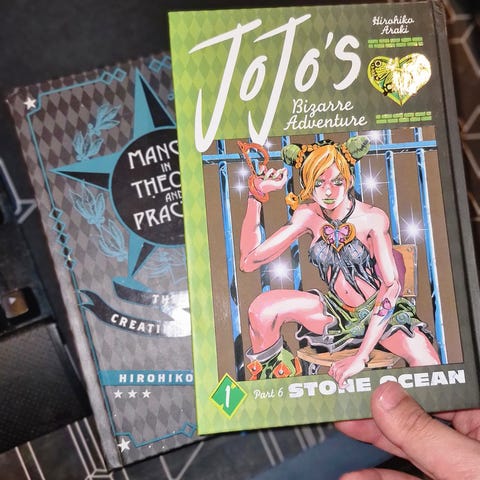
“Manga in Theory and Practice”
Til salg
Fiks færdig
99 kr.
Fragt fra 29,99 kr. + Tryg betaling 13 kr.
Tryg handel med Fiks færdig
Fiks færdig er DBA's nye betalings- og fragttjeneste. Efter levering har du 24 timer til at kontrollere varen, før pengene udbetales til sælgeren.
Varebeskrivelse
Stand: Som ny - ingen synlige brugsspor
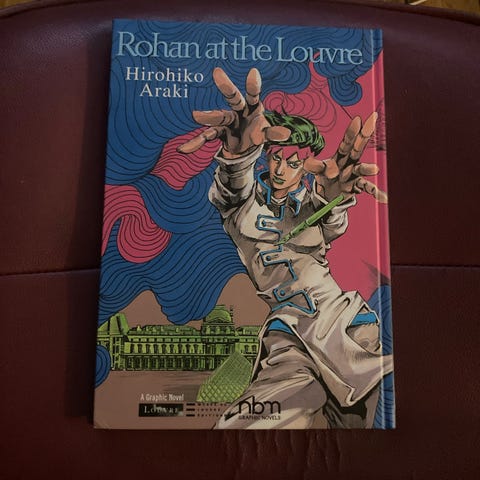
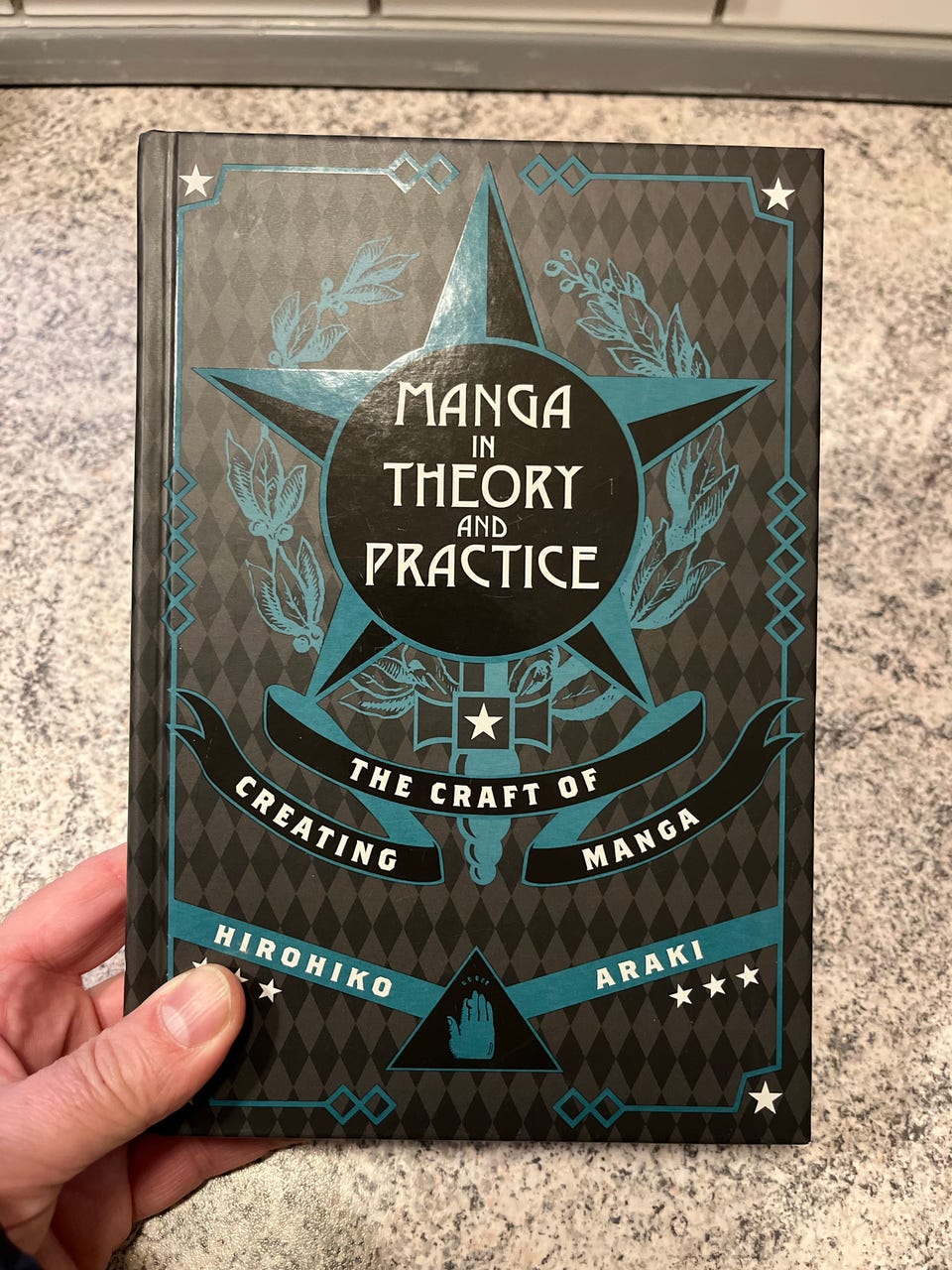
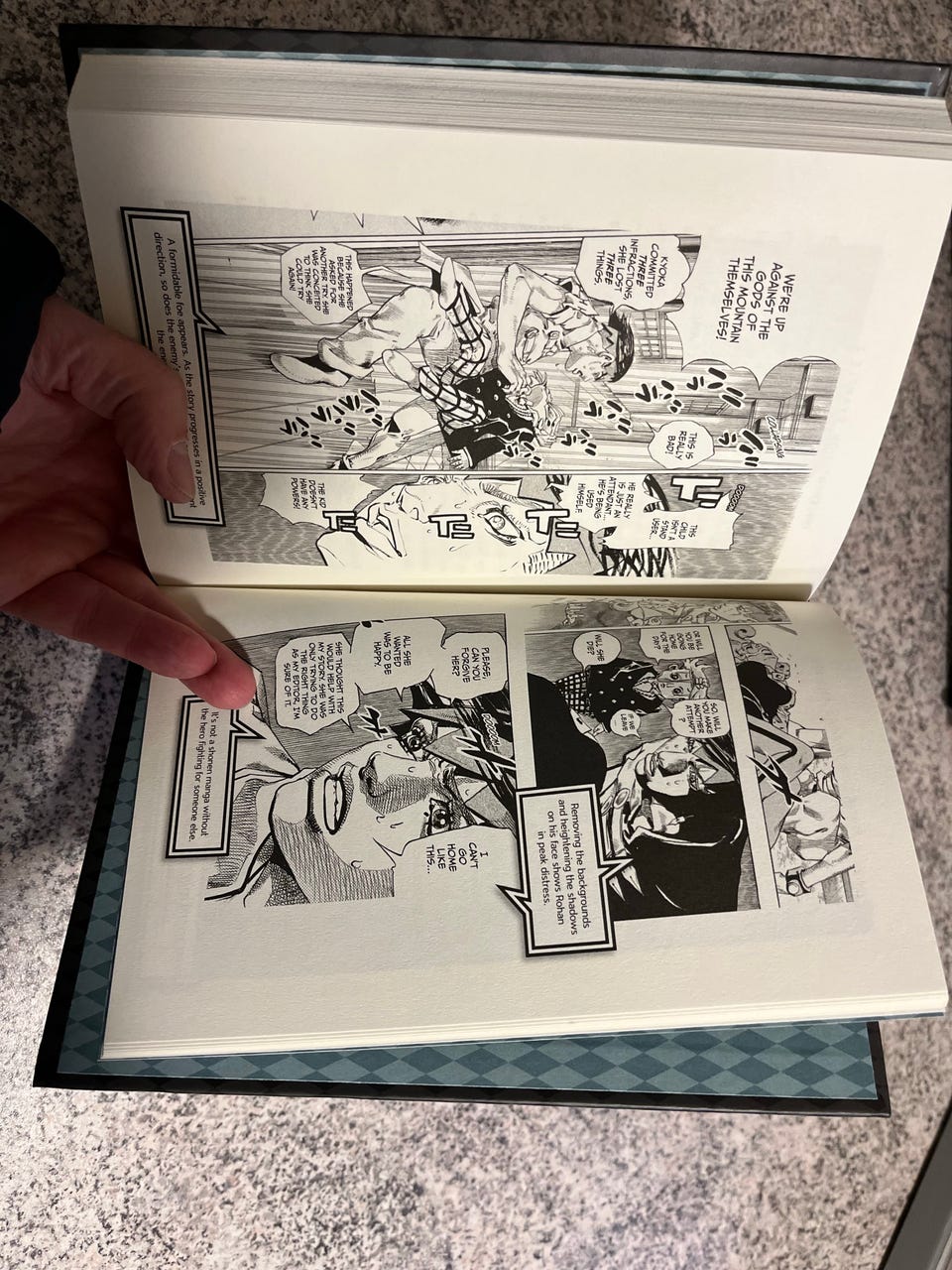
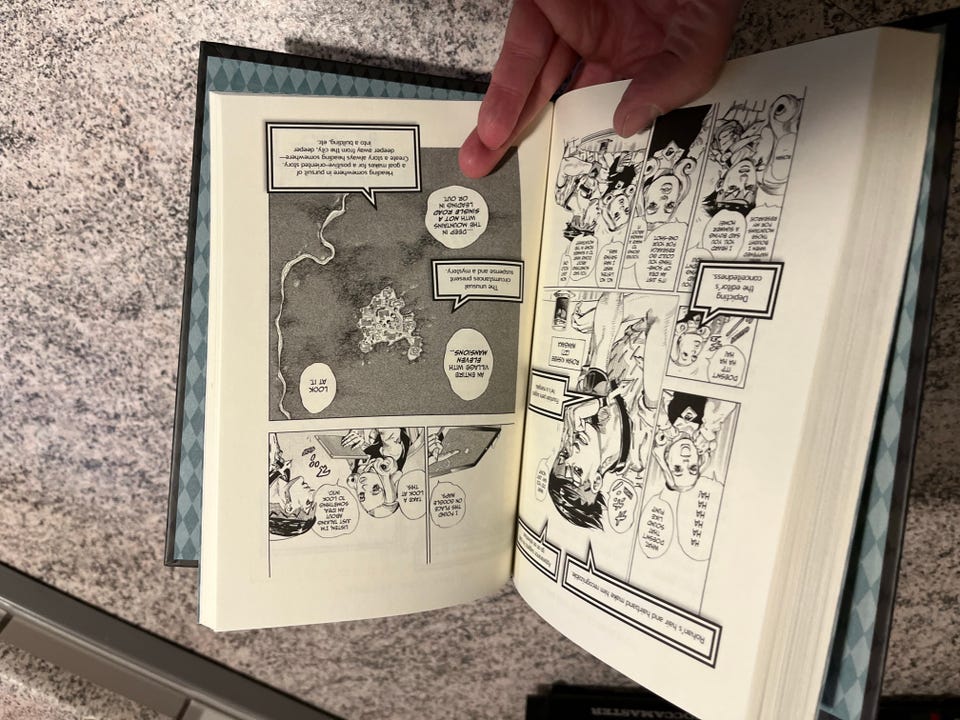
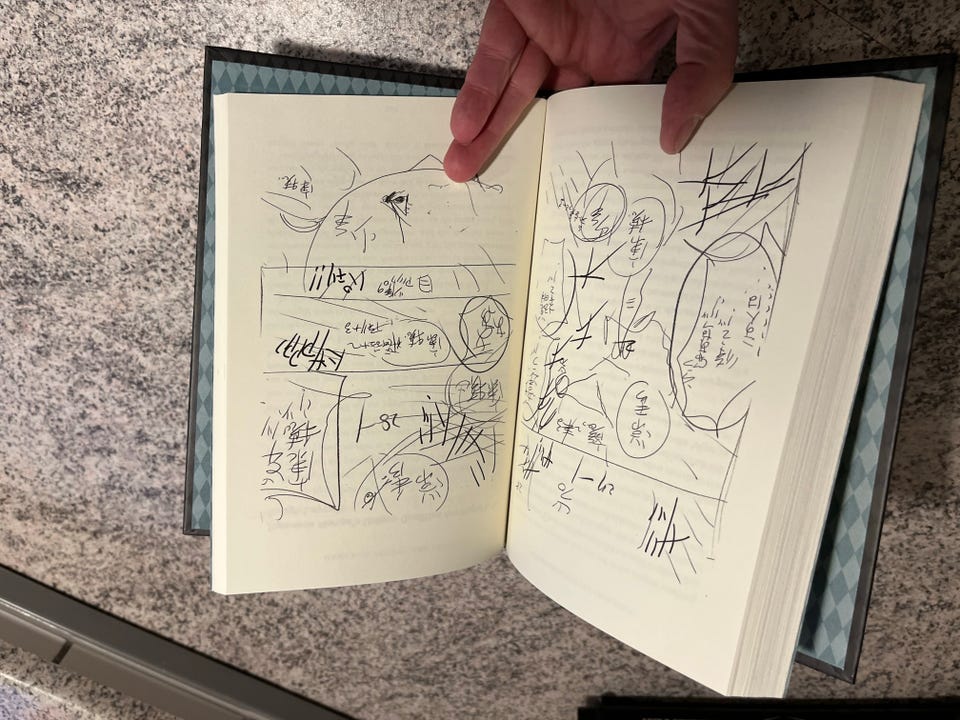
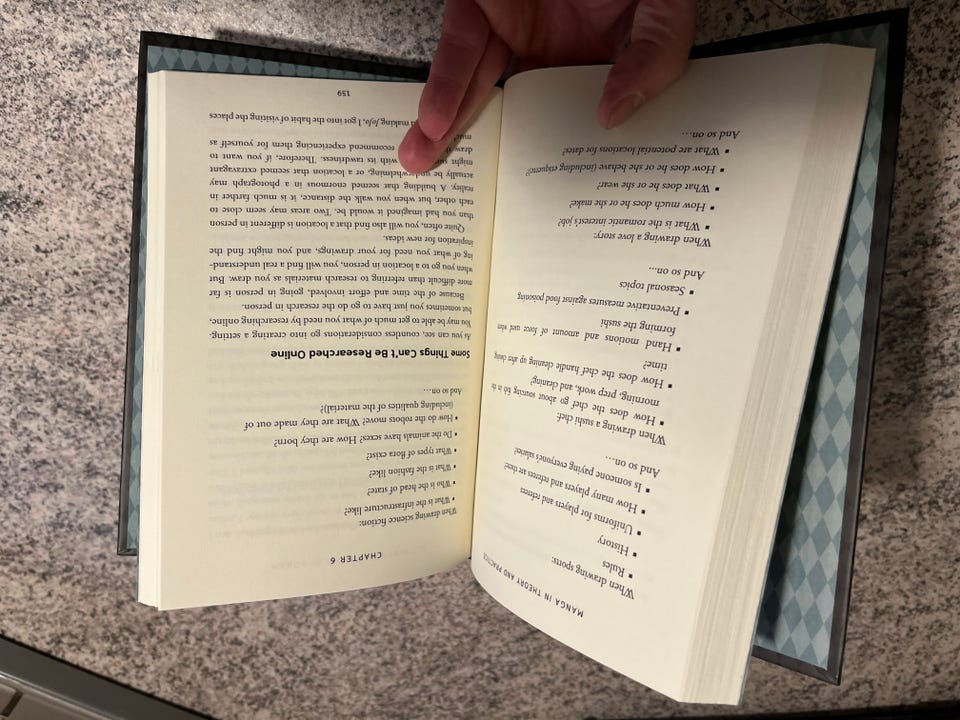
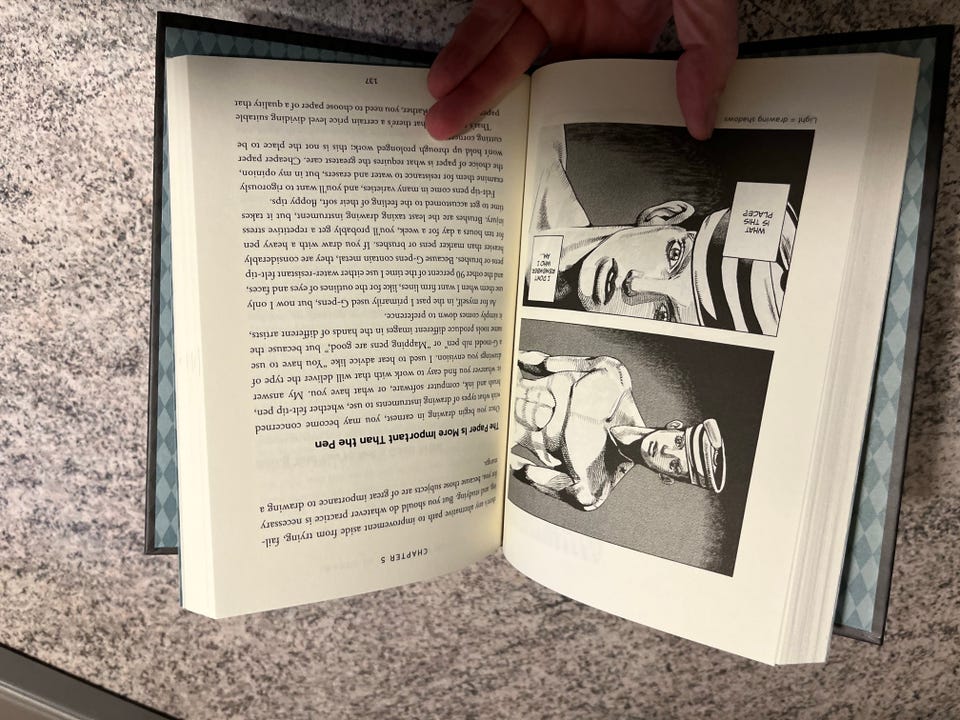
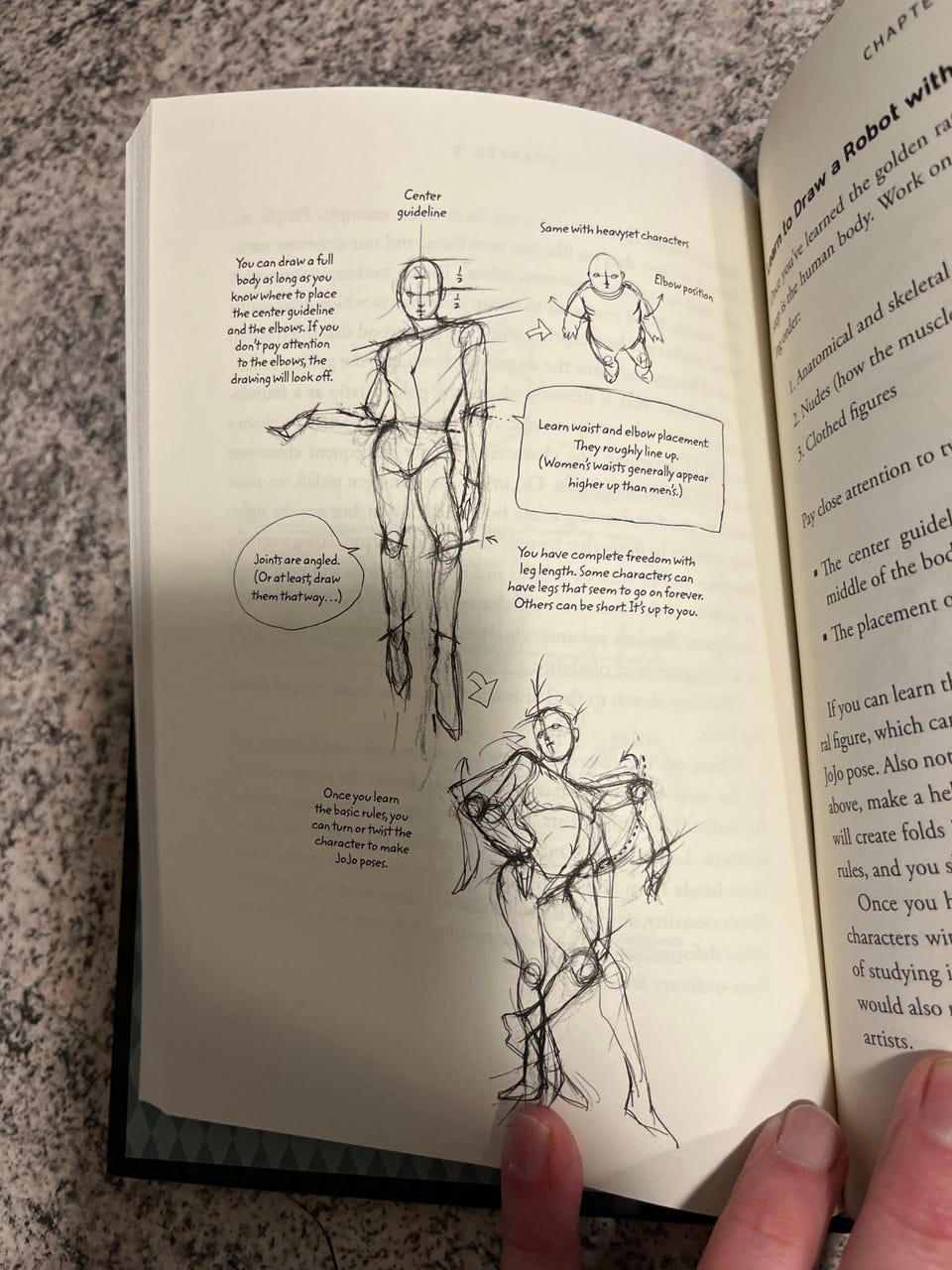
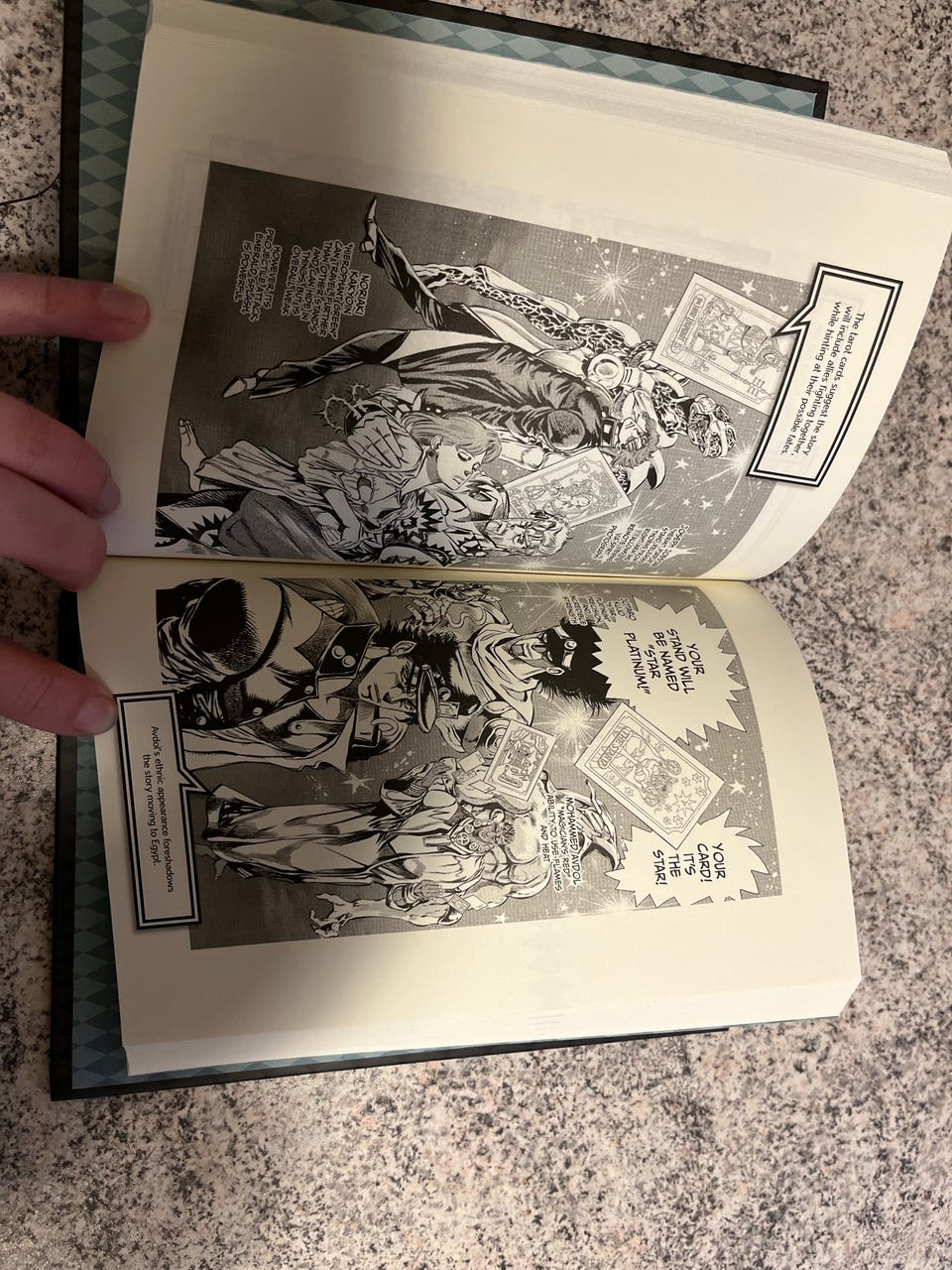
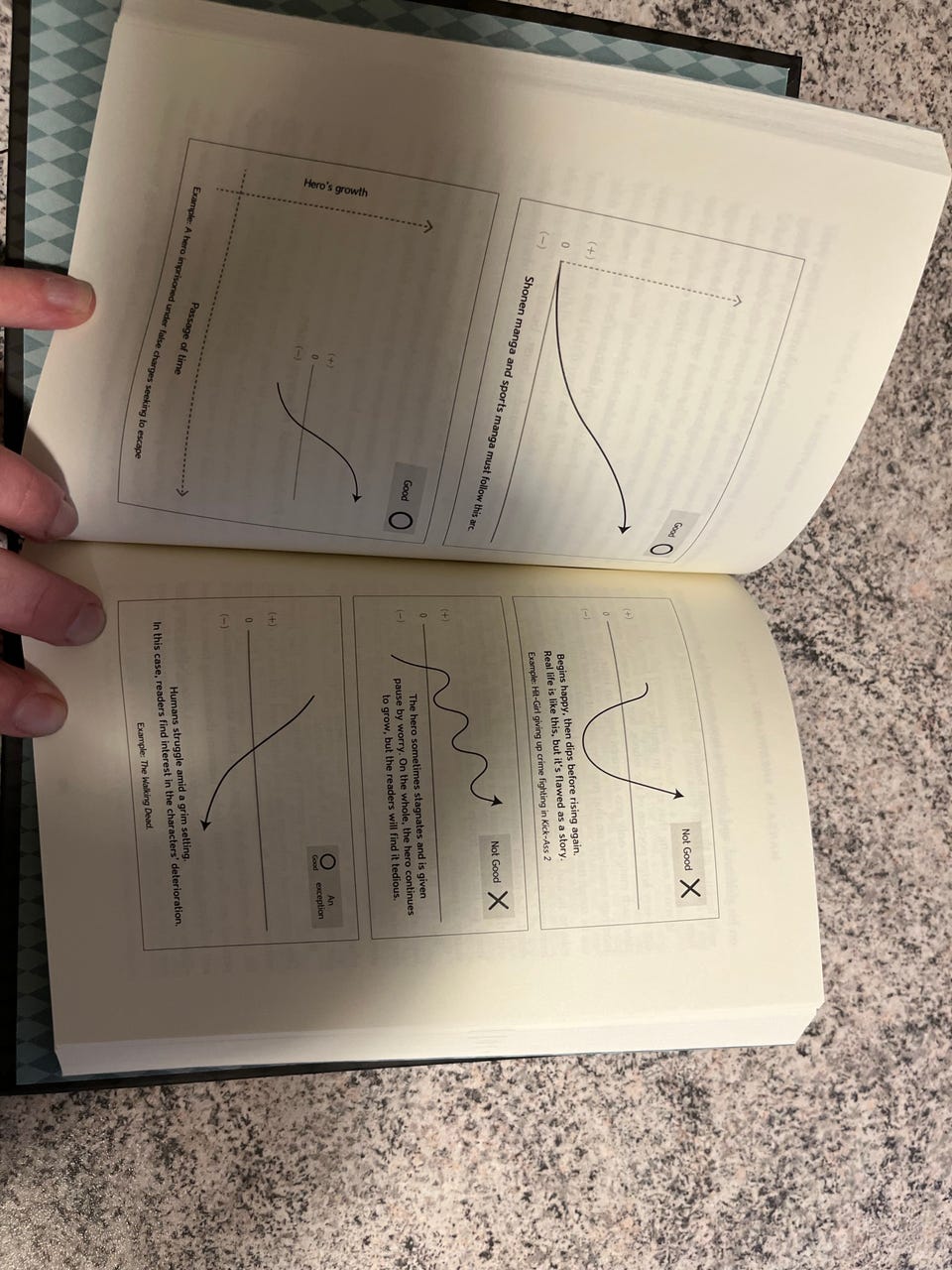
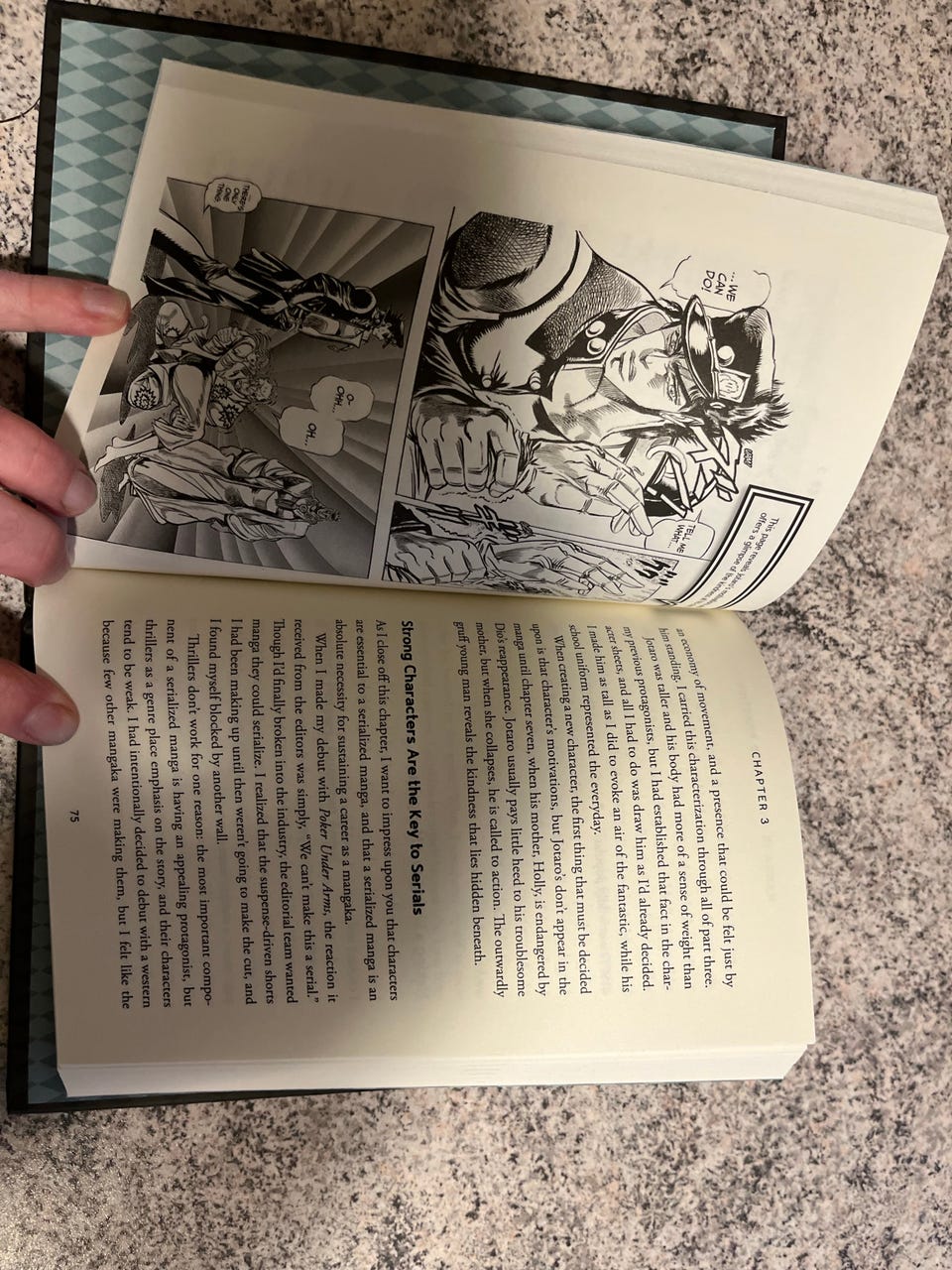
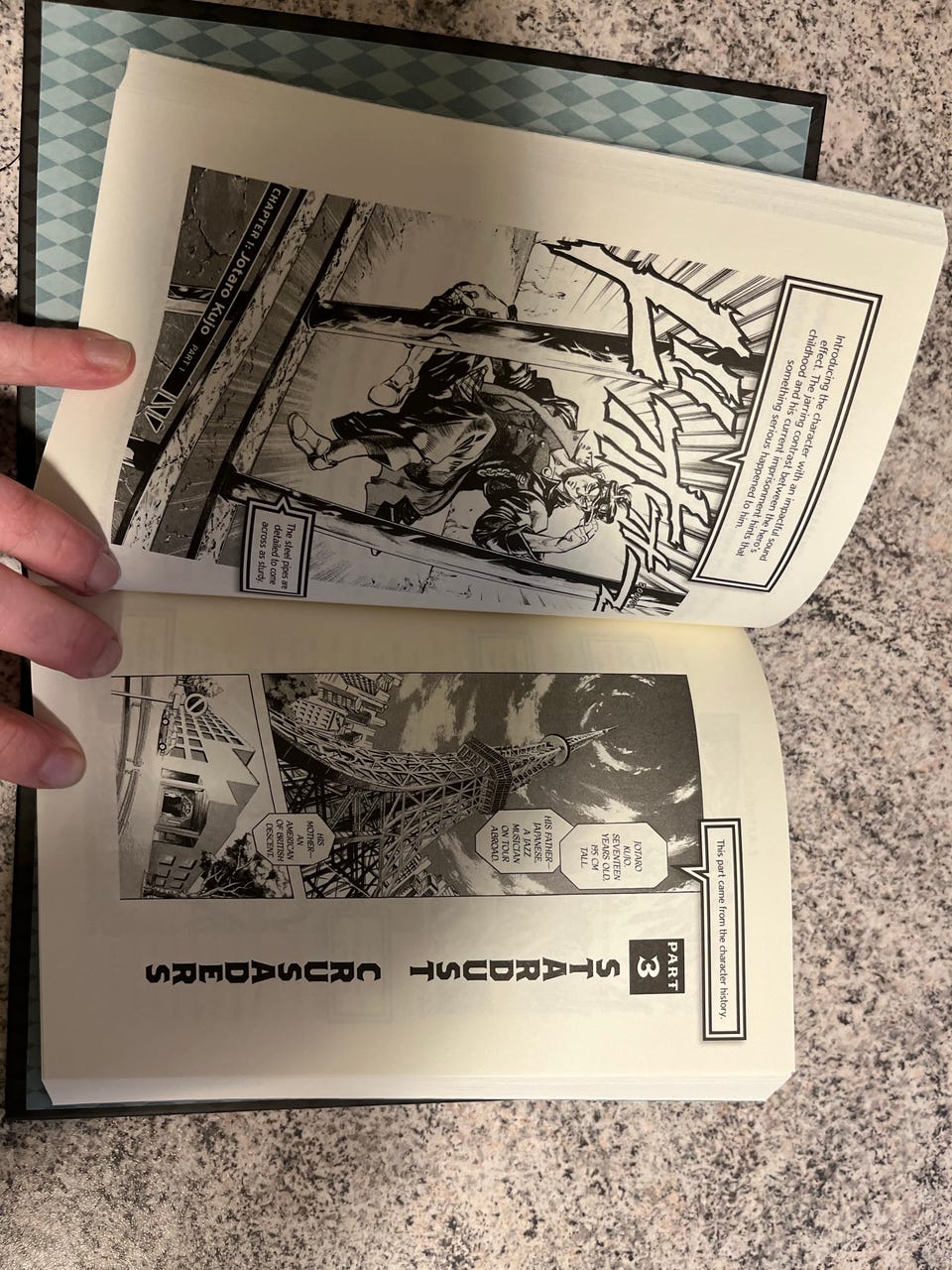
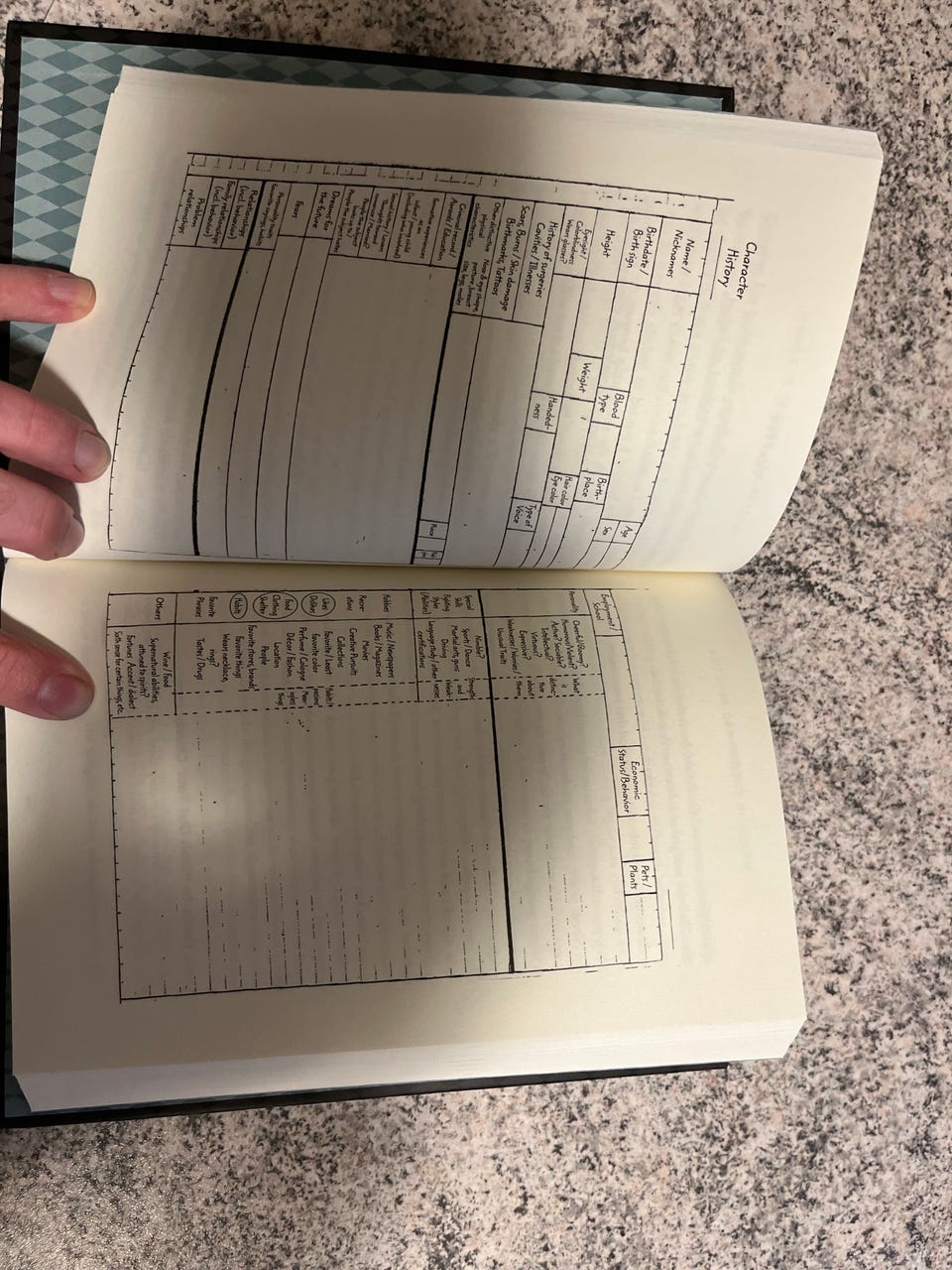
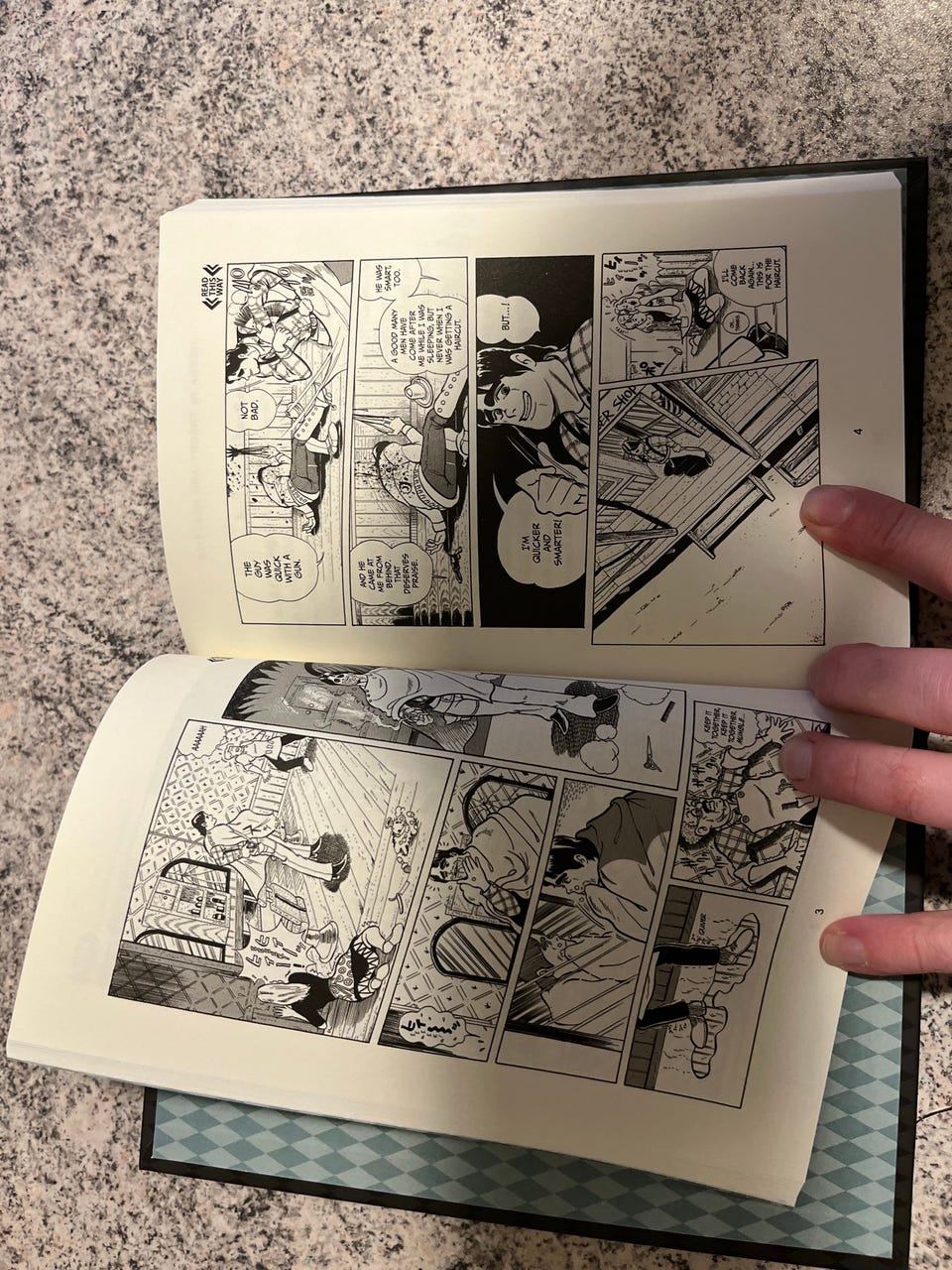
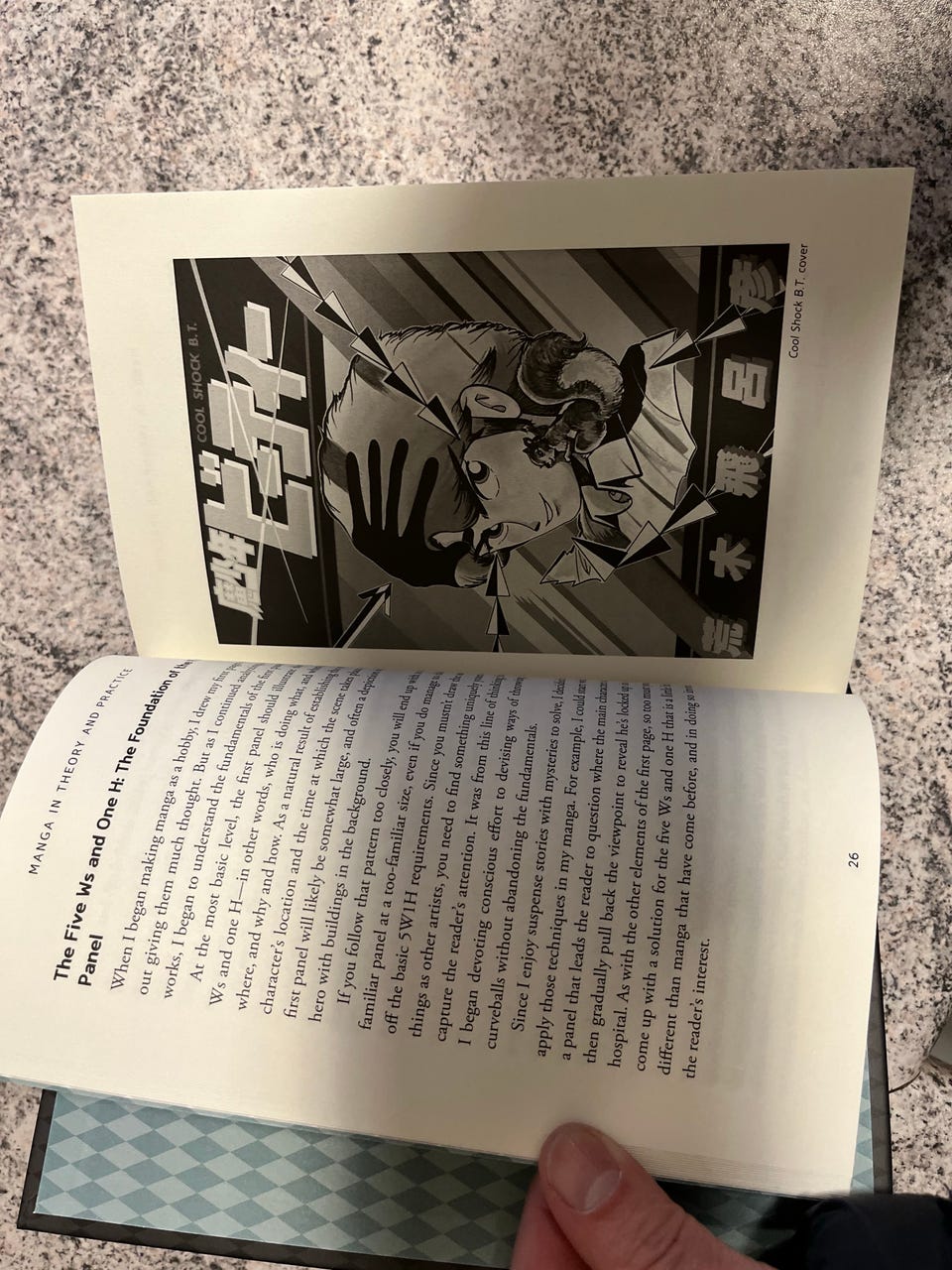
Hirohiko Araki Manga in Theory and Practice bog med sort-hvide illustrationer og tekst. Indeholder detaljer om skabelsen af manga og indeholder både teori og praktiske eksempler. Bogen er på engelsk og indeholder sider med håndtegnede skitser og noter.
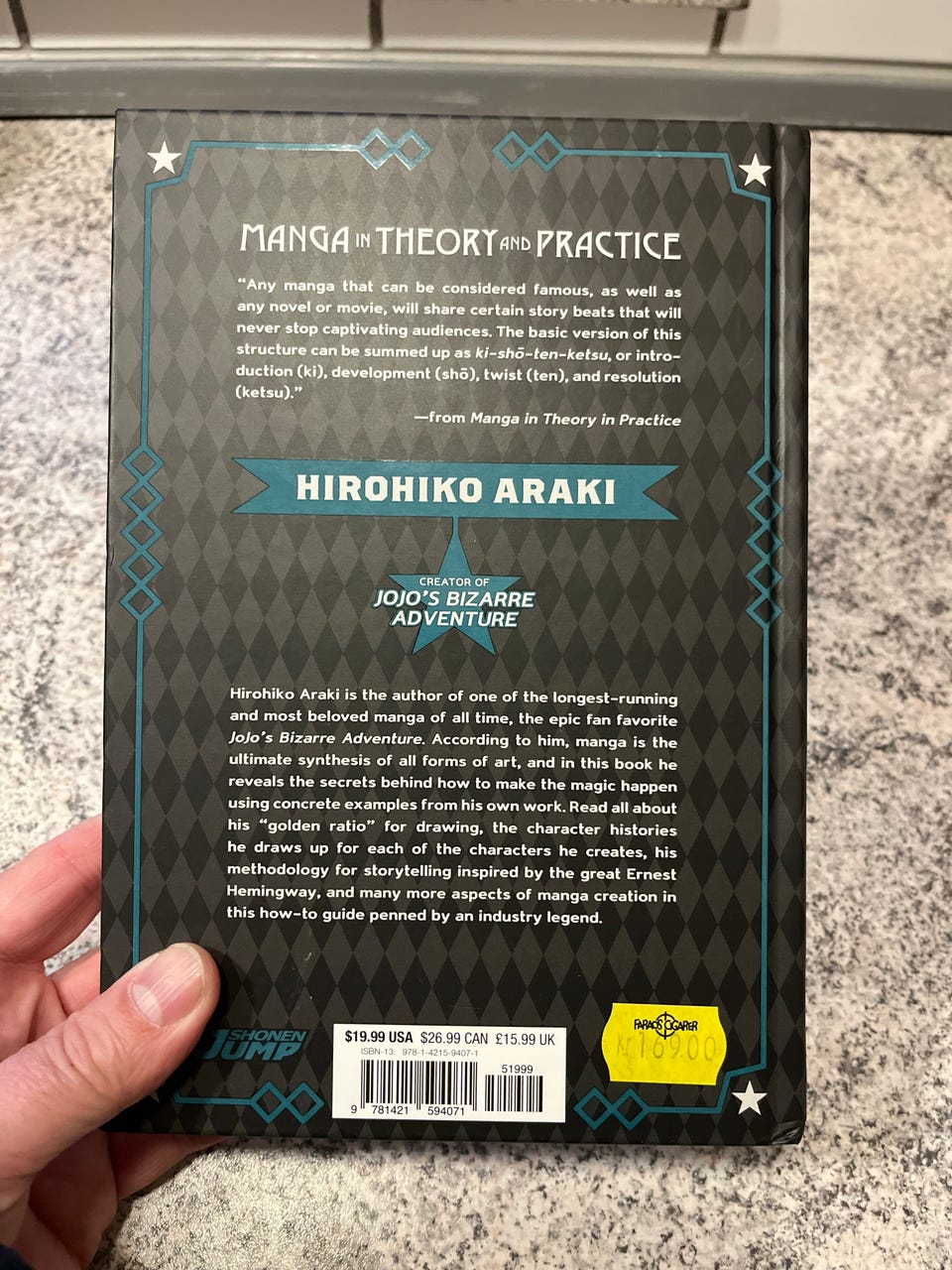
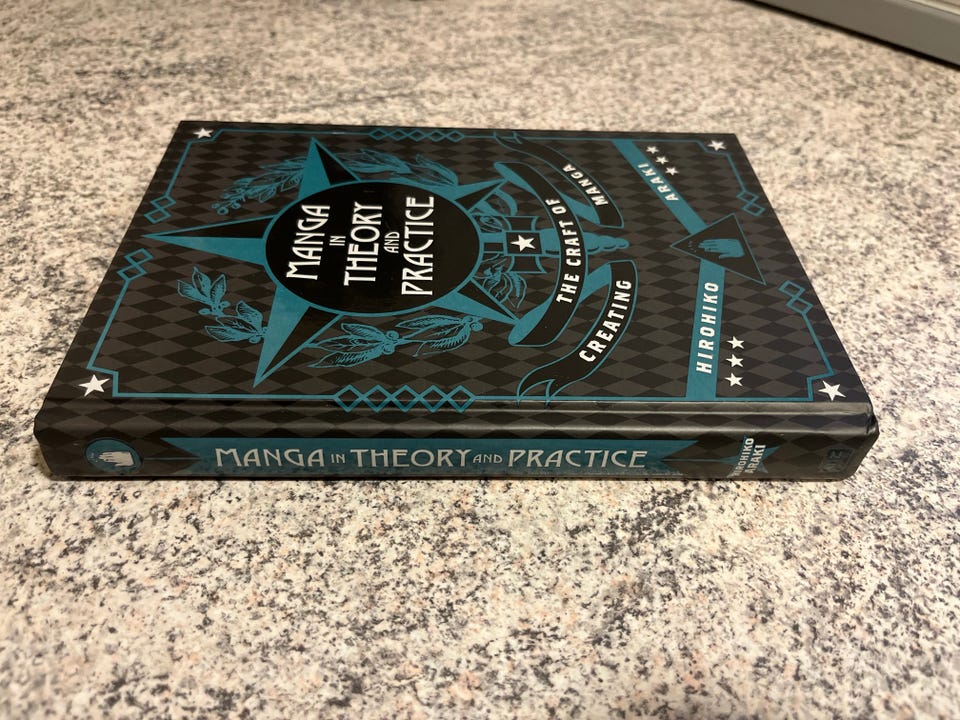
Dette er bogen Manga in Theory and Practice: The Craft of Creating Manga af forfatteren Hirohiko Araki.
Forfatter: Hirohiko Araki, skaberen af JoJo's Bizarre Adventure.
Indhold: Bogen giver vejledning i at skabe manga, herunder udformning af karakterer og historier.
Format: Indbundet bog på engelsk.
Udgiver: Viz Media.
Anmeldelse af bogen:
An exceptional introduction to creating manga that is flawed by implicit gender and racial bias
If entertainment is about reaffirming the values and tacit biases of the audience, and art is about encountering the unfamiliar and expanding horizons, Hirihiko Araki is clearly an entertainer. In his book, Manga Theory and Practice, Araki provides exceptionally clear guidance for conceiving and designing successful manga and provides informative examples that precisely illustrate each of his points. The book is a marvel of synthesis and summary, bringing to life the mangaka's creative process with an economy that surely reflects a lifetime of thinking carefully about the ways in which words and images communicate. You'll learn more than the steps for making manga, because he teaches you how to think and reflect about each step and which considerations are (in his professional experience) most important.
The book's main flaw - and it's a serious one - is its uncritical use of racial and gender bias. Araki writes and draws shonen, the most popular manga genre, aimed at boys and young men, as opposed to shojo (manga for girls). (Other genres include josei (for women 18-40), gekiga ( "dramatic pictures," complex narratives for adults), yaoi (or Boy's Love, about gay male relationships written by and for women), yuri (lesbian romance), bara (explicit gay narratives), Adventure, Sports, and Comedy). Much of his advice - such as the hero never being allowed to fail - is shaped by his experience writing weekly and monthly shonen where each installment has to excite the reader enough to read the next episode. Extensive reader surveys are conducted, and the least popular manga get cut. As such, the system, while an effective marketing device, has to play into the existing biases of its young male audience. It's a machine for perpetuating patriarchal attitudes about gender and reflects a shallow reasoning about emotions, personality, and success based on pop psychology. The upside is that its themes often convey positive moral messages about perseverance, friendship, and justice. Further, manga had grown as an industry to reflect a more inclusive perspective that values diversity.
Still, because it is entertainment, it relies on and reflects insidious biases in the world around it. In one section, Araki comments on shading a character to give him a more "ethnic" experience. He's also careful to identify the character as Egyptian, not African. First, one thing that is strange about this comment is that many manga characters appear either as Caucasian or as a hybrid caucasian-asian mix, although there are plenty of manga characters drawn to clearly be Japanese. But Araki's characters fall in the former category. So he's drawing characters that one might think of as "ethnic" or foreign-looking from a native Japanese perspective (given many of his characters look Caucasian), yet he assumes identification with these clearly non-Japanese characters as if they are native. He reserves the term "ethnic" for the African character - although he doesn't call the African character "African," instead calling him "Egyptian." There's a complex, probably unconscious bias at work here, one that continues the long standing, racist separation of Egypt from Africa that allows Caucasians, and the West more generally, to claim kinship with the mystique of Ancient Egyptian culture without identifying themselves with Africa, since Africans are still implicitly seen as being worth less than lighter skinned people in the popular imaginary. Entertainer or not, we should expect more than this from Araki.
Bemærk: Knappen til at vise den fulde beskrivelse har kun en visuel effekt.
Brugerprofil

Du skal være logget ind for at se brugerprofiler og sende beskeder.
Log indAnnoncens metadata
Sidst redigeret: 24.1.2026 kl. 16:50 ・ Annonce-ID: 18025494