Billedgalleri
(1/1)
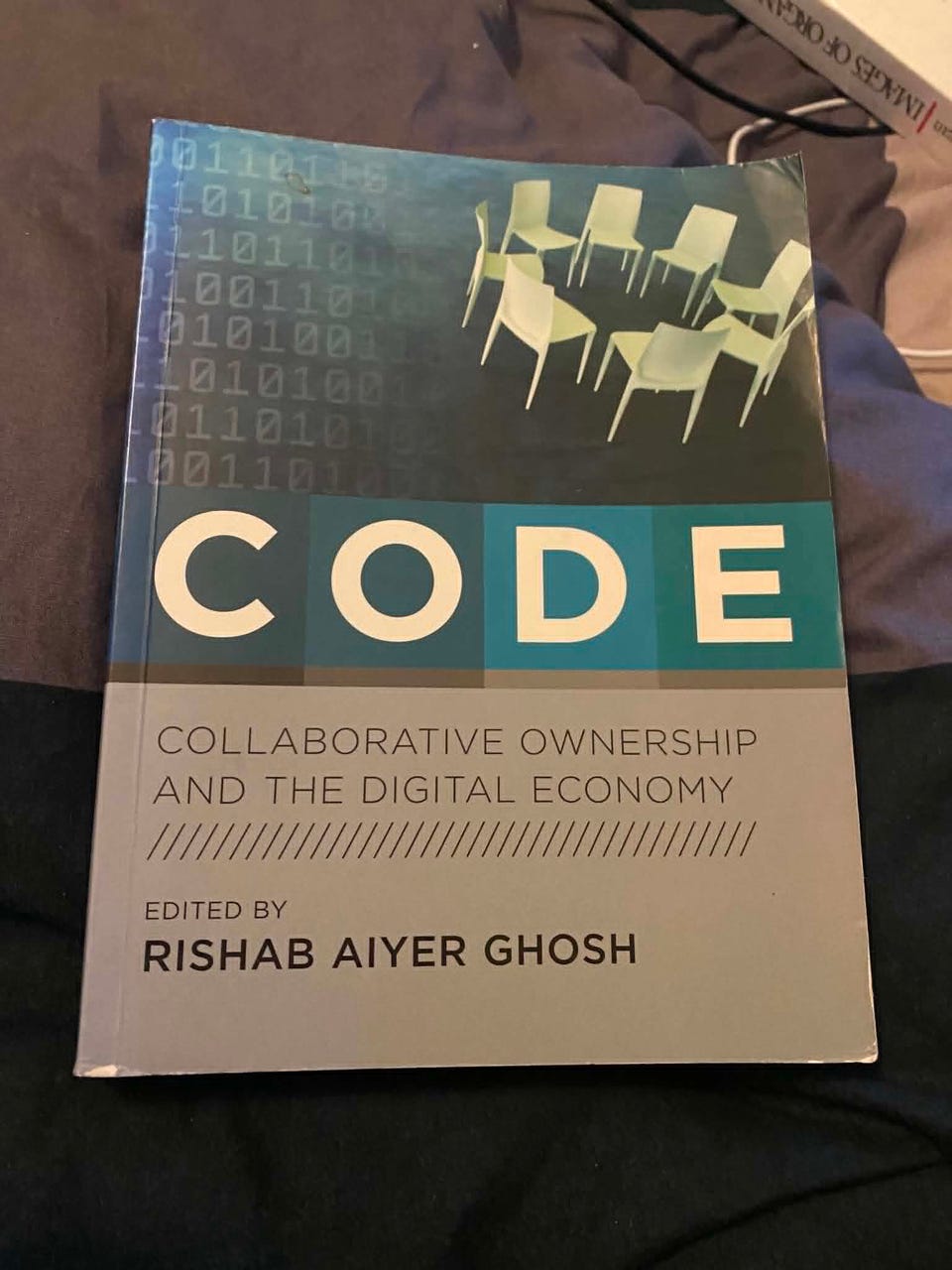
CODE: Collaborative Ownership and the Digital Economy (A Leonardo Book)
Til salg
50 kr.
Fragt fra 29,99 kr. + Tryg betaling 12 kr.
Tryg handel med Fiks færdig
Efter leveringen har du 24 timer til at kontrollere produktet. Hvis der er noget galt med produktet, får du dine penge tilbage
Opret en pakke
Køb mere fra sælgeren og betal kun én fragtomkostning.
Varebeskrivelse
Stand: Som ny - ingen synlige brugsspor
Emne: Økonomi og handel
Bogen "CODE – Collaborative Ownership and the Digital Economy" omhandler digital økonomi og samarbejdende ejerskab. Redigeret af Rishab Aiyer Ghosh og velegnet til studier inden for økonomi og handel.
CODE: Collaborative Ownership and the Digital Economy (A Leonardo Book) af Rishab Ghosh
Product details
Publisher : MIT Press
Publication date : September 8, 2006
Language : English
Print length : 358 pages
ISBN-10 : 0262572362
ISBN-13 : 978-0262572361
Item Weight : 1.2 pounds
Dimensions : 7 x 0.81 x 9 inches
Open source software is considered by many to be a novelty and the open source movement a revolution. Yet the collaborative creation of knowledge has gone on for as long as humans have been able to communicate. CODE looks at the collaborative model of creativity—with examples ranging from collective ownership in indigenous societies to free software, academic science, and the human genome project—and finds it an alternative to proprietary frameworks for creativity based on strong intellectual property rights.
Intellectual property rights, argues Rishab Ghosh in his introduction, were ostensibly developed to increase creativity; but today, policy decisions that treat knowledge and art as if they were physical forms of property actually threaten to decrease creativity, limit public access to creativity, and discourage collaborative creativity. "Newton should have had to pay a license fee before being allowed even to see how tall the 'shoulders of giants' were, let alone to stand upon them," he writes.
The contributors to CODE, from such diverse fields as economics, anthropology, law, and software development, examine collaborative creativity from a variety of perspectives, looking at new and old forms of creative collaboration and the mechanisms emerging to study them. Discussing the philosophically resonant issues of ownership, property, and the commons, they ask if the increasing application of the language of property rights to knowledge and creativity constitutes a second enclosure movement—or if the worldwide acclaim for free software signifies a renaissance of the commons. Two concluding chapters offer concrete possibilities for both alternatives, with one proposing the establishment of "positive intellectual rights" to information and another issuing a warning against the threats to networked knowledge posed by globalization.
Brugerprofil

Du skal være logget ind for at se brugerprofiler og sende beskeder.
Annoncens metadata
Sidst redigeret: 29.8.2026 kl. 21:46 ・ Annonce-ID: 24434756